
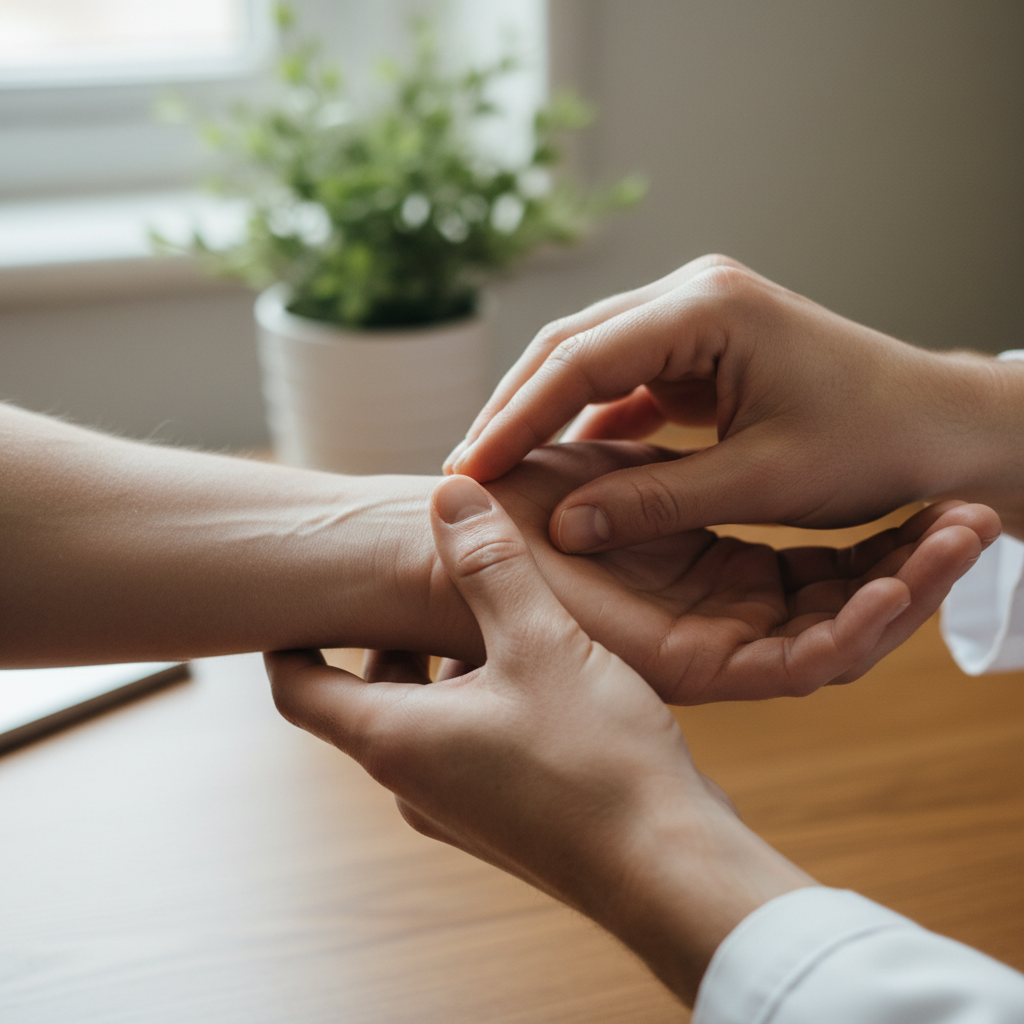
Movement Disorder Specialists
Subspecialty-trained neurologists, not generalists
Your Diagnosis Is Not Your Destination.
We sit with you, milligram by milligram, until the handwriting steadies — treating the tremor, the sleep, the gait, the voice, and the mood.
Our care coordinator will contact you within one business day to confirm your appointment.
What Are You Experiencing?
Select everything that resonates. There are no wrong answers — this helps us understand where you are right now.
Resting tremor
Hand, arm, or leg shakes when relaxed
Morning stiffness
Muscles feel rigid or slow to start
Smaller handwriting
Letters have gotten progressively tinier
Voice changes
Speaking more softly or less clearly
Sleep disruption
Acting out dreams, restless nights
Shuffling or balance issues
Shorter steps, leaning, or near-falls
Reduced facial expression
Others say you look blank or serious
Reduced sense of smell
Foods and scents less vivid than before
Is Your Current Treatment Working?
Three honest questions. No judgment — just clarity about where your protocol stands and what can be adjusted.
How long does each dose of medication hold before symptoms return?
Do you experience unpredictable "off" periods — times when your medication suddenly stops working?
Are you experiencing involuntary movements (dyskinesia) or significant nausea from your current medications?
Neurologists Who've Spent Decades Mapping the Basal Ganglia
Our team holds subspecialty fellowship training in movement disorders — not general neurology rotations. Every appointment is with a specialist whose entire career has been Parkinson's.

Dr. Margaret Osei-Bonsu
Movement Disorder Neurologist
MD, PhD — Johns Hopkins Neurology
Dopamine pharmacokinetics, DBS candidacy evaluation, advanced Parkinson's protocols
"The basal ganglia doesn't lie. Every signal it sends is adjustable."

Dr. Anand Krishnamurthy
Parkinson's & Tremor Specialist
MD — UCSF Movement Disorders Fellowship
Gait rehabilitation, voice therapy coordination, REM sleep behavior disorder
"Sleep and gait are not footnotes. They are the whole story."

Dr. Claire Wentworth
Neurologist, Mood & Cognition
MD — Mayo Clinic Neurology
Depression and anxiety in Parkinson's, cognitive monitoring, caregiver support
"The mood is part of the disease — and it deserves the same precision."
All three neurologists hold active Movement Disorder Society membership and maintain subspecialty CME in Parkinson's disease annually.
We Treat More Than the Tremor
Parkinson's disease touches six distinct domains of daily life. Our care model addresses all of them — not as separate referrals, but as one coordinated plan.
Motor Control
Tremor, rigidity, bradykinesia — adjusted milligram by milligram until the handwriting steadies and the coffee cup holds still.
Sleep
REM sleep behavior disorder, insomnia, and excessive daytime sleepiness each have specific, treatable pathways separate from motor medication.
Gait & Balance
Freezing of gait, festination, and postural instability — coordinated with physical therapy and targeted medication timing.
Voice & Swallowing
Hypophonia and dysarthria are treatable with LSVT-trained speech therapy we coordinate directly from your neurologist's referral.
Mood & Anxiety
Depression and anxiety in Parkinson's are neurobiological — not reactive. They respond to targeted pharmacological and behavioral intervention.
Cognition
Regular cognitive monitoring, proactive discussion of mild cognitive impairment, and planning conversations that happen before they're urgent.
Not ready to book yet?
Download our free guide — what the first appointment involves, what to bring, what questions to ask, and what to expect from a medication review.
Book Your First Assessment
Three questions. Our care coordinator calls within one business day to confirm your time.